Published : Tuesday, 31 March, 2026 at 12:00 AM
Md Atikur Rahman

Democracy is often envisioned as a resilient structure—an enduring system capable of weathering political storms and adapting to the evolving needs of society. Once the foundational pillars of a free society—fair elections, independent judiciaries, and a vibrant press—are established, it is commonly assumed that liberty is secured. Yet this assumption overlooks a critical reality: democracy is not a static framework but a dynamic and fragile contract between the state and its citizens. When this contract is strained by persistent political instability, the foundations of democracy do not merely crack—they risk collapsing altogether.
The question of whether democracy can be undermined by instability is not theoretical; it is one of the defining challenges of our time. The answer, regrettably, is yes. However, democratic erosion rarely occurs through abrupt coups or violent revolutions. More often, instability acts as a slow-moving corrosive force, gradually weakening democratic norms, institutions, and public trust until the system falters under its own weight.
When a political system is beset by internal discord—whether it is legislative gridlock, fragile coalitions, or frequent leadership changes—the ability to deliver essential services diminishes. In this governance vacuum, public confidence erodes. Citizens, fatigued by dysfunction and uncertainty, may begin to perceive democracy not as a guarantor of freedom and justice, but as a source of chaos and inefficiency. Infrastructure projects stall, healthcare reforms languish, and economic policies remain unimplemented. When basic needs go unmet, the social contract appears broken—creating fertile ground for authoritarian appeals and populist rhetoric.
Demagogues frequently emerge from the ruins of political instability, offering to replace the complexities of democratic deliberation with the allure of swift, unilateral authority. For electorates weary of chaos, this trade-off may seem less like a loss of liberty and more like a restoration of order. Democratic processes are portrayed as indecisive and weak, while authoritarian measures are framed as efficient and strong. In this narrative, the very safeguards designed to prevent tyranny—such as judicial oversight, legislative debate, and press scrutiny—are recast as obstacles to progress. The erosion of these checks and balances is often subtle, cloaked in the language of reform and national interest.
Instability also fuels polarization, which undermines the spirit of democratic compromise. In stable democracies, political opponents are viewed as legitimate rivals; in unstable ones, they are increasingly seen as existential threats. As political stakes escalate, norms of civility and restraint are abandoned. Institutions become battlegrounds, weaponized to serve partisan interests rather than the public good. The judiciary, bureaucracy, and law enforcement—pillars of democratic neutrality—are repurposed to silence dissent and entrench power. Once these institutions lose their impartiality, the democratic playing field becomes irreparably skewed, making electoral course corrections nearly impossible.
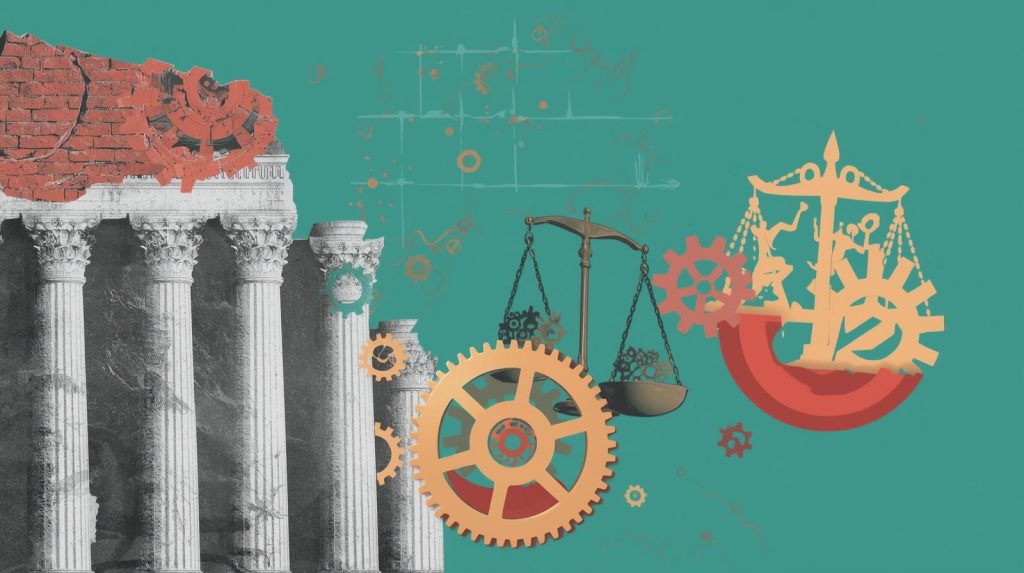
The economic dimension of political instability is profoundly consequential, as volatility undermines investor confidence and impedes sustainable development. When market rules appear unpredictable, both foreign and domestic investors hesitate. This leads to inflation, unemployment, and wage stagnation. Economic hardship amplifies political unrest. When democratic governance fails to provide for its citizens, radical ideologies gain traction. Democratic institutions are scapegoated as corrupt or inefficient, and alternative systems—often authoritarian—are presented as solutions. The poor, disproportionately affected, become vulnerable to manipulation by those seeking to dismantle democratic norms. In such conditions, populist leaders exploit economic grievances to consolidate power, often under the guise of national revival.
The role of media and information ecosystems cannot be overlooked. During periods of instability, disinformation flourishes as heightened public anxiety renders conspiracy theories more acceptable and factual reporting increasingly dismissed as politically biased. The truth becomes obscured by the noise of political conflict. Without a shared reality, democratic consensus becomes unattainable. Journalism, ideally a guardian of liberty and accountability, is often targeted; reporters are harassed, outlets are censored, and narratives are controlled. When the free press is silenced, democracy begins to die in darkness. The erosion of media freedom not only undermines transparency but also disables the public’s ability to make informed decisions, further weakening democratic participation.
Democratic erosion seldom occurs as a singular event; rather, it unfolds gradually through a deepening cycle of public disillusionment and collective resignation. It begins when stability is prioritized over liberty and culminates when institutions meant to check power are repurposed to consolidate it. The descent into authoritarianism is often met not with resistance but with apathy from a public exhausted by years of turmoil. This erosion is not always visible in headlines—it often occurs quietly, through legal reforms, bureaucratic restructuring, and shifts in public discourse.
To safeguard democracy, stability must be recognized not as a byproduct of good governance, but as its prerequisite. Political leaders must understand that brinkmanship and refusal to compromise do more than stall legislation—they undermine the legitimacy of the democratic system itself. Addressing the root causes of instability—such as inequality, corruption, and lack of institutional accountability—is essential to prevent democracy from being surrendered in broad daylight.
International cooperation is indispensable, as instability within a single nation often transcends borders, igniting regional crises and eroding the integrity of global democratic norms. Diplomatic engagement, economic support, and multilateral pressure must be mobilized to reinforce fragile democracies. Global institutions must play a proactive role in promoting democratic resilience, particularly in regions vulnerable to the resurgence of authoritarianism.
Yet the ultimate responsibility lies with citizens and their leaders. Democratic culture must be cultivated through civic education, public engagement, and the promotion of tolerance and pluralism. Citizens must be empowered to hold their leaders accountable, resist authoritarian temptations, and defend democratic norms. Political literacy, critical thinking, and active participation are vital tools in this endeavor. Only through a renewed commitment to democratic values can the corrosive effects of instability be reversed. If these warning signs are ignored, democracy may not be lost in a dramatic coup, but quietly relinquished—remembered not as a triumph of self-governance, but as a fleeting ideal undone by the turbulence of ambition and the failure to protect its fragile foundations.
The writer is a Researcher