Published: Tuesday, 24 March, 2026 at 12:00 AM

In a rapidly changing world, it is essential to move beyond outdated perceptions of aging and recognize the invaluable experience and skills of older persons as assets for inclusive and sustainable development. Aging is not merely a biological process—it is a multidimensional experience shaped by social, economic, and cultural contexts. Today, older persons are living longer, remaining active, and making significant contributions to societal development; yet, they often face systemic barriers that limit their full participation in society. It is essential to acknowledge aging as a meaningful and active stage of life, which necessitates a shift in mindset—one that emphasizes respect, inclusion, and the enhancement of intergenerational resilience. This approach is not only essential for ensuring social equity but also for cultivating sustainable and compassionate societies that value the contributions of every individual, regardless of age.
Although aging has historically been viewed through a lens of dependency and decline, this narrative is now increasingly being challenged. The traditional belief that older persons are passive recipients of care is being gradually replaced by the recognition that they are active contributors to their families, communities, economies, and cultures. Their accumulated knowledge, life experience, and social capital are invaluable assets. Empowering aging begins with reframing societal perceptions. On this perspective, media, education, and public discourse must promote positive images of aging, highlighting stories of older individuals who continue to lead, innovate, and inspire. This shift is essential to combat ageism—a pervasive form of discrimination that undermines the dignity and potential of older persons.
Dignity is the foundation of human rights and must be upheld at every stage of an older person’s life, which encompasses access to quality healthcare, financial security, freedom from abuse, and the ability to make autonomous decisions. Yet, millions of older individuals around the world face systemic neglect, marginalization, and exploitation. To address this, governments must strengthen legal frameworks that protect the rights of older persons. This includes ratifying and implementing international conventions, such as the Madrid International Plan of Action on Ageing, and developing national aging policies that prioritize dignity and justice. Healthcare systems must also be reorganized to meet the specific needs of aging populations. Geriatric care, palliative services, and mental health support should be integrated into primary healthcare.
Social inclusion stands as a fundamental pillar of empowerment, underscoring the need for older persons to be meaningfully engaged in the social, economic, and political dimensions of community life. This prerequisite involves removing barriers to participation and creating environments that are accessible, welcoming, and responsive to their needs. Age-friendly cities and communities, as promoted by the World Health Organization (WHO), offer a model for inclusive urban planning. These initiatives focus on enhancing mobility, housing, public spaces, and social services to ensure that older persons can live independently and fully engage with society. As digital technologies increasingly shape communication, commerce, and governance, ensuring digital inclusion has become essential—particularly in empowering older persons through access to digital literacy and equitable participation in the digital age. Bridging the digital divide not only enhances access to services but also fosters social connectivity and reduces isolation. Intergenerational programs can also play a transformative role by facilitating dialogue and collaboration between younger and older generations, these initiatives promote mutual understanding, reduce stereotypes, and strengthen social cohesion.
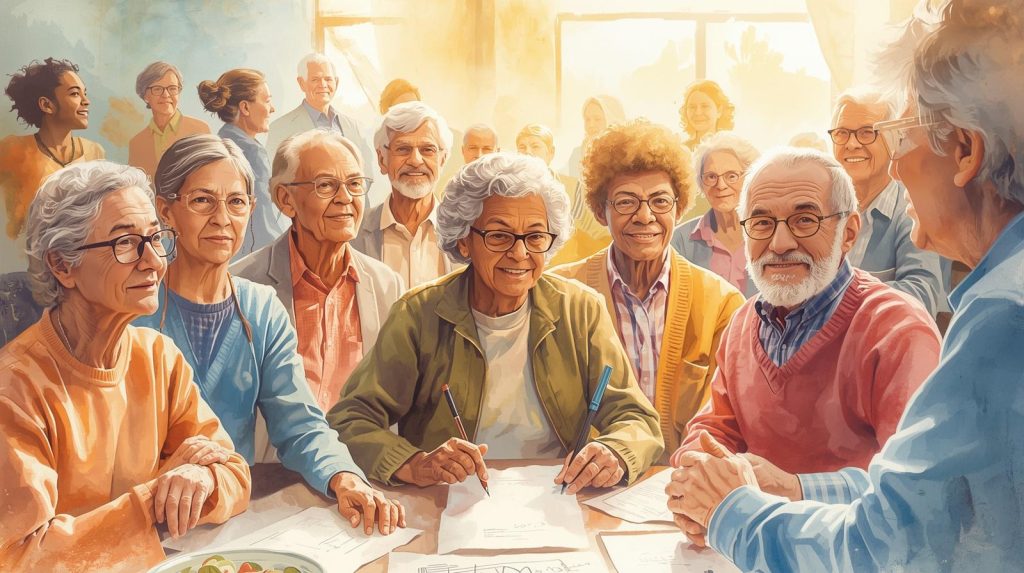
Resilience among older adults is shaped by a dynamic interplay of individual capacities, meaningful social networks, and robust institutional support systems that collectively enable them to adapt, thrive, and maintain well-being in the face of life’s challenges. Yet, in a world increasingly disrupted by climate change, pandemics, economic volatility, and forced displacement, these vulnerabilities are magnified—underscoring the urgent need for inclusive, adaptive, and age-sensitive interventions. There are several strategies to build a resilient community for the elderly that require proactive and inclusive policy-making; firstly, disaster risk reduction strategies must consider the specific needs of older persons, including mobility challenges, health conditions, and social isolation. Secondly, emergency response plans should include age-sensitive protocols and ensure that older individuals are not left behind during crises. Thirdly, social protection systems, including pensions, insurance, and community support networks, are crucial for economic resilience. These mechanisms provide stability and security, enabling older persons to navigate life transitions with confidence. Moreover, promoting lifelong learning and active aging can enhance psychological resilience. Opportunities for education, volunteering, and creative expression help older individuals maintain a sense of purpose and agency.
The United Nations Decade of Healthy Ageing (2021–2030) provides a comprehensive framework for global action. It emphasizes four key areas: changing perceptions of aging, fostering age-friendly environments, delivering integrated care, and improving access to long-term care. These pillars align closely with the themes of dignity, inclusion, and resilience. However, global frameworks must be coordinated to involve governments, civil society, academia, and the private sector, all of which have roles to play. Community-based organizations can offer tailored support, while businesses can innovate products and services that cater to older consumers. On the other hand, academic institutions can research to inform evidence-based policies, and media outlets can amplify the voices of older persons.
In conclusion, recognizing the empowerment of aging populations as both a strategic imperative and an ethical responsibility is fundamental to shaping inclusive, equitable, and future-ready societies. This imperative transcends generational divides and institutional boundaries, calling for a unified response anchored in dignity, equity, and resilience. By fostering environments where older persons are not merely protected but actively engaged as contributors to social, economic, and cultural advancement, we strengthen the foundations of justice, cohesion, and sustainable development. In a world marked by rapid transformation and uncertainty, aging must be approached not with hesitation or exclusion, but with intentional investment, respect, and visionary leadership—ensuring that every phase of life is lived with autonomy, purpose, and enduring societal value.
The writer is a Researcher